


Five years ago, I was displaced in a New Jersey hotel lobby, upset that Hurricane Isaias hit my Connecticut town so hard.
My electricity–and more importantly my Wi-Fi! (and even cell service)–ended up being out for a full week.
And various trees missed my house by an eyelash which could have been a disaster.
The next thought from that hotel lobby was that my electricity was out…but not my power.
My power to realize that none of these “champagne problems” would be of any significance to those around the world who don’t have electricity, Wi-Fi or cell service in the first place…and they could care less about the tree that just missed falling on my house (because they may not even own a house).
In that spirit, I want to repeat a post from seven years ago to the day (with some updates)—about my once-in-a-lifetime trip to Kenya.
Those of you who are new to my online family may not have heard about it before…and since it’s been a minute, most of you who are veterans in my online family probably don’t recall reading it. ☹
The experience was extremely valuable for me—and now maybe for you—when we think about being bummed out about things we don’t have…or thinking about luxuries as necessities…or when we think life is dealing us cruel blows which are blows that resemble minutia rather than anything monumental.
My trip to Kenya snapped me out of lamenting about what I have and don’t have…with new emphasis in two areas:
- To always be grateful for what you have rather than what you don’t have (temporarily or permanently), no matter how life treats you.
- The importance of mentors, but with an entirely new spin from the perspective of the students I encountered in Kenya.
Some background on the trip which had, as its main purpose, opening a school (and opening a community).
I was moved to tears on more than one occasion watching the kids at the Sanimarco School (now called San Marco Comprehensive) in a rural area outside of Nairobi, care for each other in such profound ways—no “Mean Girls” or petty fighting among these students.
They all have a voracious appetite for education and learning…and curiosity about everything, which you can get a sense of here:
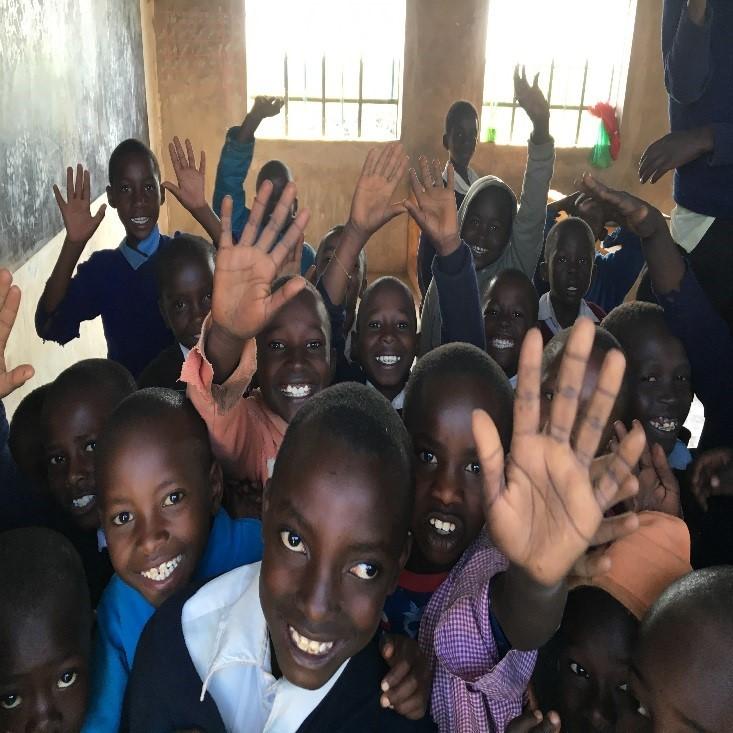
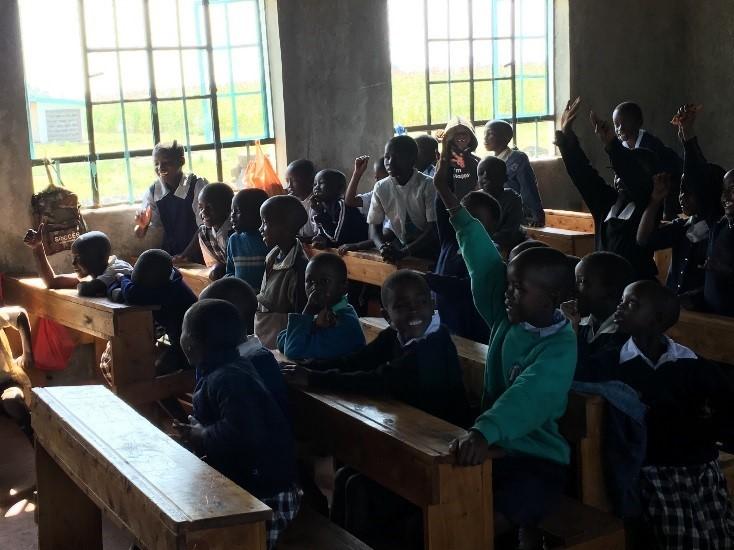
San Marco was the 12th school built in Kenya by an amazing organization, Village Impact (they are on their 16th now), the brainchild of two magnificent philanthropic entrepreneurs, Amy and Stu McLaren.
Amy and Stu are all about transformation and inspiration…and they do both effortlessly (or so it seems).
It’s who they are, not what they do.
Back to the kids:
How they express unconditional love and support for each other is worth paying close attention to…and an example for all of us to follow.
They encourage each other rather than compete…maybe it’s because they each have so little in terms of material goods…so nothing gets in the way of learning when the best thing you have is each other.
Kind of like the ultimate mastermind. 😊
When water and electricity are luxuries…and a deflated soccer ball is a prized possession (see below) …pettiness, jealousy and so many other emotions many of us obsess about daily are non-existent for them.
They embrace what little they have in possessions and creature comforts…and they truly understand what it means to be appreciative.
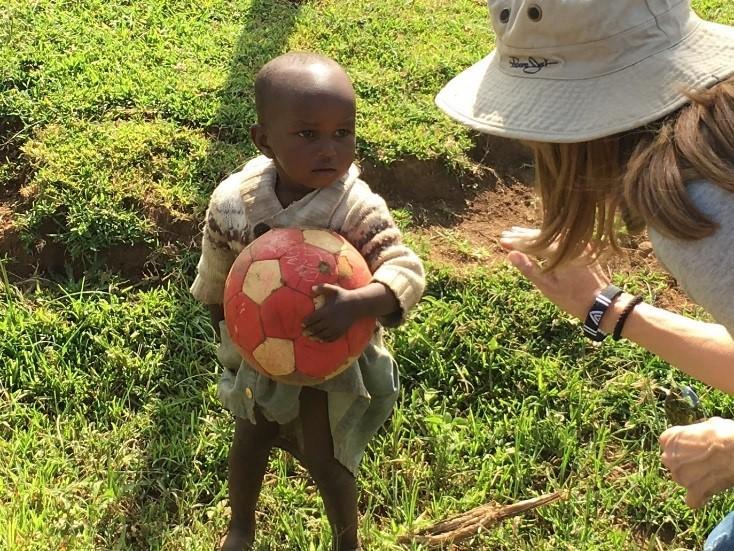
This is my wife Robin NOT trying to take the ball away from this adorable little guy…I swear!
Titans Marketing was able to donate a classroom to San Marco thanks to so many of you who have bought educational products from me or participated in the growth of Titans Marketing over the past decade.
Thank you!
It was a privilege to participate.
And whether you knew it or not, you all participated too.
The classroom is officially dubbed, “Titans of Kenya.”
Here is one of our partners at the school putting up the sign…
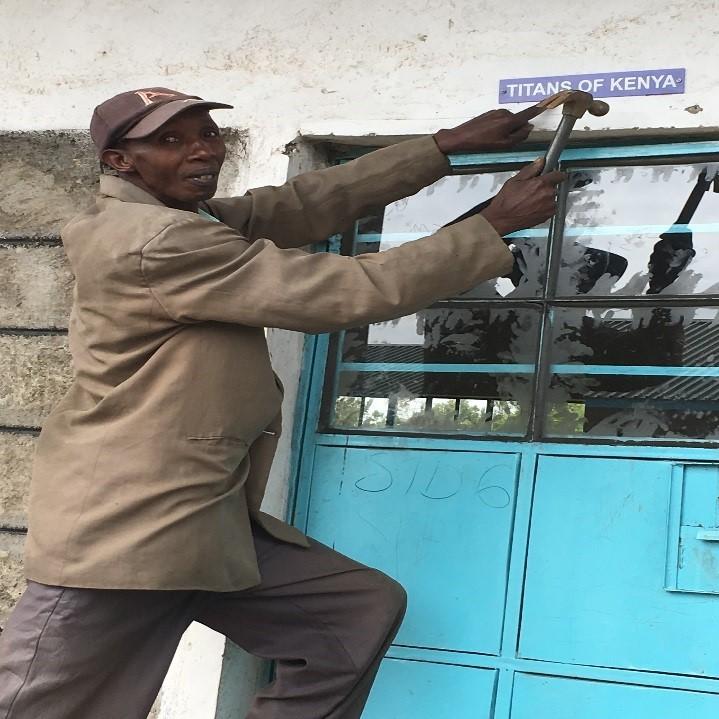
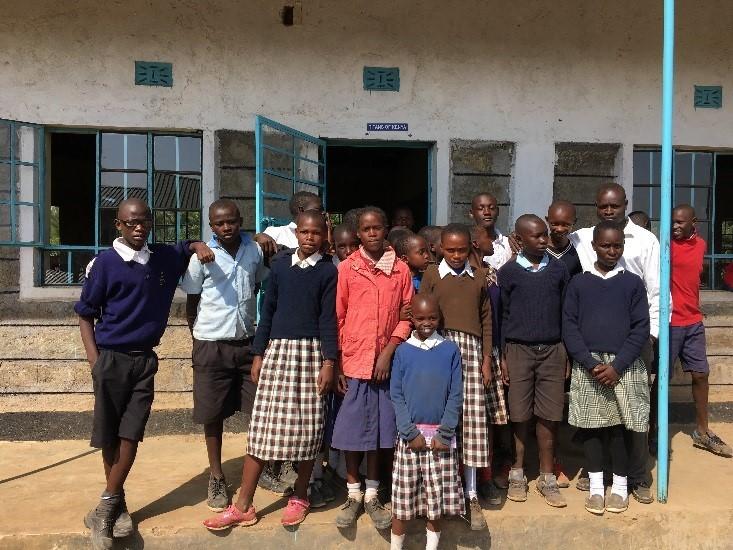
…and here are the students who were the original “Titans of Kenya” in August of 2018:
Here are the two main lessons from this trip that I hope will resonate with you:
On Gratitude
Many of you wrote to me after reading about this trip the first time I shared it and asked:
“Why are folks who have the means to travel and make a difference in a foreign country not doing more right here in the United States where there is more poverty and deprivation than we would like to admit?”
It’s hard to argue with that… so I won’t.
Short answer: You can do BOTH.
I can only tell you that making a difference in as many places as we can where we can teach more (and support education)—which maximizes the number of people we can encourage to “go forth and multiply” (i.e. teach what they learn to others around the world)–is always worthwhile.
Whether you give inside your own country or in a foreign country, when it’s for education, it’s a way of showing gratitude for all the opportunities we have that others don’t.
I’m sure you know this quote and it applies here:
Give a Man a Fish, and You Feed Him for a Day.
Teach a Man to Fish, and You Feed Him for a Lifetime.
In addition, the notion of building a school which becomes the focal point of any community, foreign or domestic, is an exponential contribution; and it’s one that we should always look to participate in whenever we have the opportunity.
Frankly, the U.S. has many more schools, even in rural areas, than places like Kenya.
And those kids in Kenya understand it was mostly Americans and Canadians who donated that school…and I’m confident that they will all want to come to North America someday to share all they have learned.
Maybe one of those Kenyan students becomes a doctor or scientist and comes up with a cure to some dreaded disease (or some other major contribution to the world)?
And who might they help in addition to people in their country?
Just throwing that out there as an example of how we are connected globally.
I see it when I receive orders for Breakthrough Advertising, now from over 75 countries, from the young and old, the wealthy and the poor, all looking to educate themselves.
That’s global impact…but local impact is equally impactful.
Only a few miles up the road from my house in Connecticut is the city of Bridgeport where there is a pressing need for volunteers to help with programs in the schools.
My wife participated in one which partially inspired our trip to Kenya.
I’m sure you have similar opportunities in your communities.
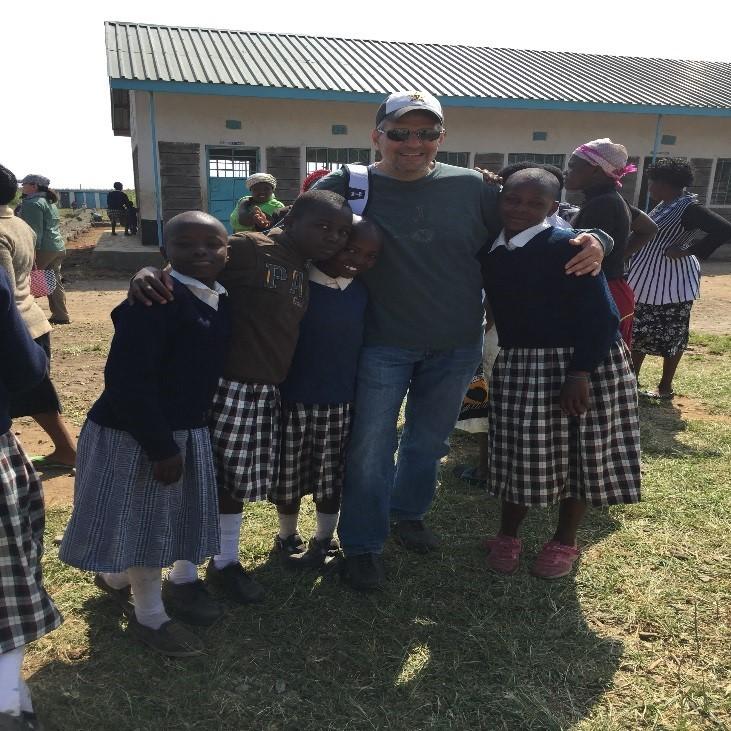
In Bridgeport, my wife Robin went into the classrooms to help challenged students learn how to read—a program called “Book Buddies”; in Kenya, we went into the classrooms as well to try to make a difference anyway we could.
While I will tell you that the students in Kenya were grateful for the pencil cases, Lego pieces and nail polish we gave out (as kids in Bridgeport would be as well), I know they are far more grateful for the school itself and the long-term education and stability it will supply for them…and their community.
Their gratitude for being able to attend school every day is about two things:
- Presence over presents
- Learning to fish
And from our perspective, our gratitude came from our presence and teaching them to fish in whatever ways we could.
On Mentoring
One thing that was particularly striking among the children we met in Kenya was how much responsibility is put on each of them, even at a very young age.
That is, I saw numerous kids as young as 12 years old caring for younger siblings, even bringing them to school since there was no one else at home to watch them.
And these same students often need to miss school to work on behalf of the “family business” whether it’s farming, crafts or whatever brings in revenue to their households.
But it was this caring for their siblings, almost as surrogate parents, that put a whole new meaning on a topic we talk so much about here, especially in our business community.
I always say you don’t choose your mentors…your mentors choose you.
And that was apparent among these kids in Kenya (out of necessity).
When I had an opportunity to speak in front of the 12-year-olds, i.e. “The Titans of Kenya 2018,” (through an interpreter, although so many of these students speak fluent English), I wanted to teach them about mentoring and the importance of passing on their wisdom to the next generation.
Then I realized that I was telling them something they already knew better than me.
The importance of mentors and mentoring was paramount in my life but only crystalized for me when I turned 40– but this is something that is part of their lives, almost from birth.
I also got to speak with students who were in high school in some of the other schools built by Village Impact years before, and it was clear that they all come back to the primary schools to teach and encourage…and mentor.
It’s amazing how much these kids know about mentorship without ever being taught about it.
Paying everything forward is in their DNA.
In summary, all I can say is that I came home believing that money and time is a blessing since they are both precious assets, enabling us to contribute more.
We can live on what we need (and take good care of the “prized racehorse”—us!).
From there, we can figure out the most productive ways to give away as much as possible, in money and time, to create the most impact possible.
Stu’s goal, for example, is to become a billionaire, prioritizing generosity and global impact after providing for his family with what they need.
He’s already doing this in a big way before achieving billionaire status…so it’s not just talk.
My ultimate mentor Marty Edelston, a multi-millionaire in his own right, had a quote that further supports this notion…and I have it written on a post-it note, stuck to my computer monitor:
“I can only eat three meals a day and sleep in only one bed at night…which keeps me thinking about contributing to others every day.”
I believe this generosity begins with education and schools, which produce the maximum return in terms of gratitude; and it is the key to creating world class mentors so everything gets paid forward into the future.
The next time I find myself complaining about a flat tire, traffic, a blackout, or not having enough hot water…anything that has no bearing on long term happiness or is simply an inconvenience…I will think fondly on the “Titans of Kenya” and know they can power through much more than I ever will.
Warmly,
Brian
P.S. After meeting the “Titans of Kenya,” we went on a safari and learned some new, albeit sometimes violent, life lessons in the jungle.
Seeing in real time many “circle of life moments” …how animals in the wild must live day-to-day since they never know when they will go from a happy-go-lucky zebra grazing in the grass to becoming a full course dinner for a hungry lion, is a reminder to live in the moment and do good deeds every day.
And of course, we should all eat well and only the healthiest food too!
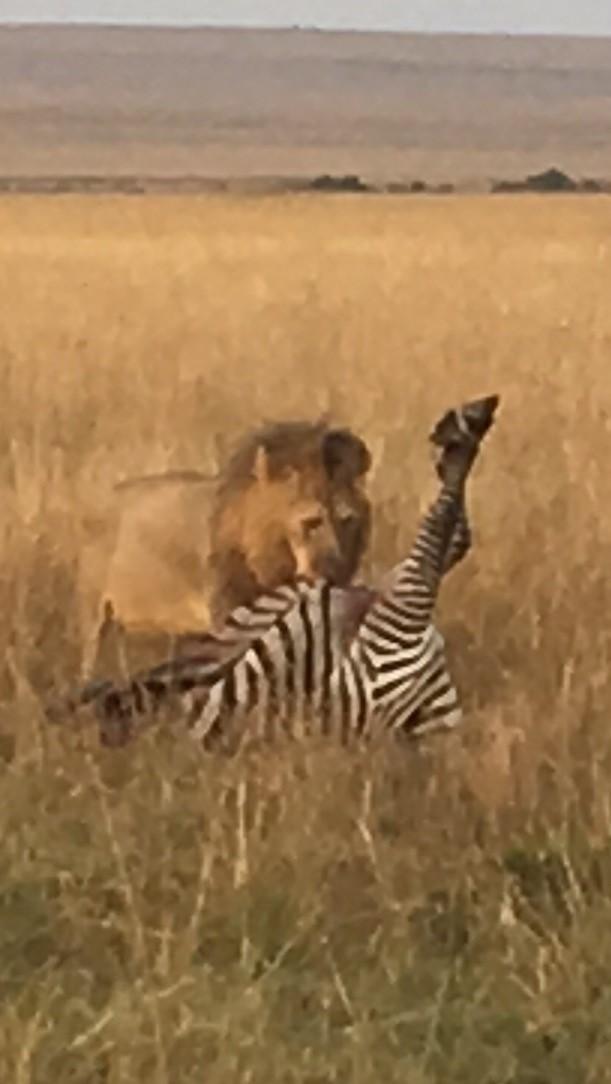
And then there is another piece of advice I learned while on safari:
Always watch your step since you never know what might be lurking in the grass under your feet…
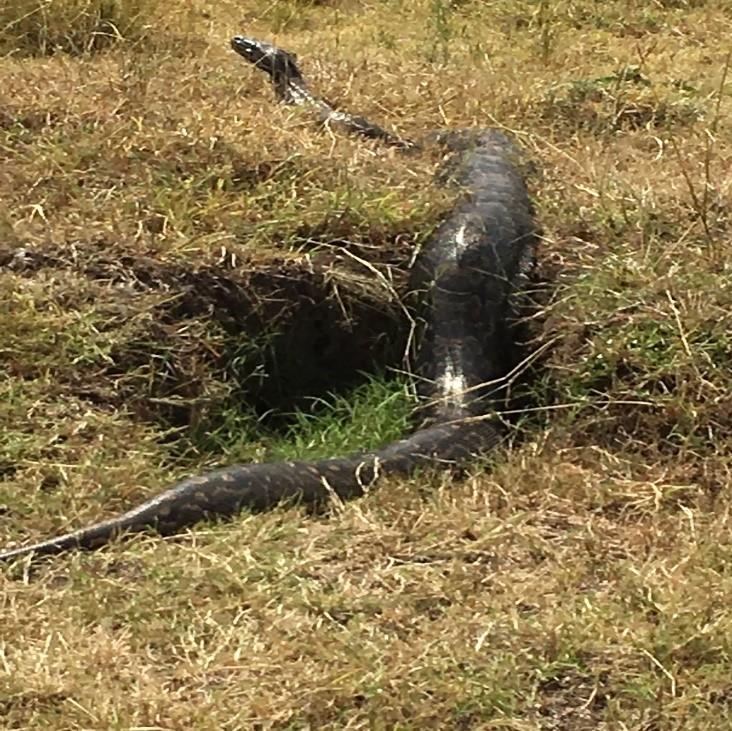
…like my friend, the Rock Python…and he was only my friend because I never got out of the jeep.
A “snake in the grass” of epic proportions…and as dangerous as any deviant marketer. 😊